How AI Is Changing Cyber Attacks and Why Your Business Needs Stronger Security
A few years ago, a serious cyber attack needed time, technical skill and a lot of patience. Today, an attacker can ask an AI tool to do a large part of that work in minutes. That single change is reshaping the security landscape, and businesses of every size are feeling the pressure.
Reports of breaches at large, well known websites and platforms have become common, and many of them involve attackers who used automation and AI to find a way in faster than defenders could react. If organizations with big budgets and dedicated security teams can be reached, a growing company with a small IT team should not assume it is too small to be noticed.
This article explains what is actually changing, how AI is being used against businesses, what a breach really costs, and what you can do about it today.
What Has Changed: AI Is Now Part of the Attack Chain
AI does not invent entirely new crimes. What it does is make familiar attacks faster, cheaper and far more convincing. Tasks that once needed a skilled hacker working for days can now be repeated at scale by someone with much less experience.
Three things have shifted at the same time:
- Speed. Scanning thousands of websites for a known weakness used to take serious effort. Automated tools now do it continuously.
- Quality. Scam messages used to be easy to spot because of poor grammar and odd wording. AI removes those warning signs.
- Access. Techniques that once belonged to expert groups are now available to almost anyone willing to try.
The result is more attacks, better attacks and a shorter gap between a weakness appearing and someone exploiting it.
How Attackers Are Using AI Against Businesses
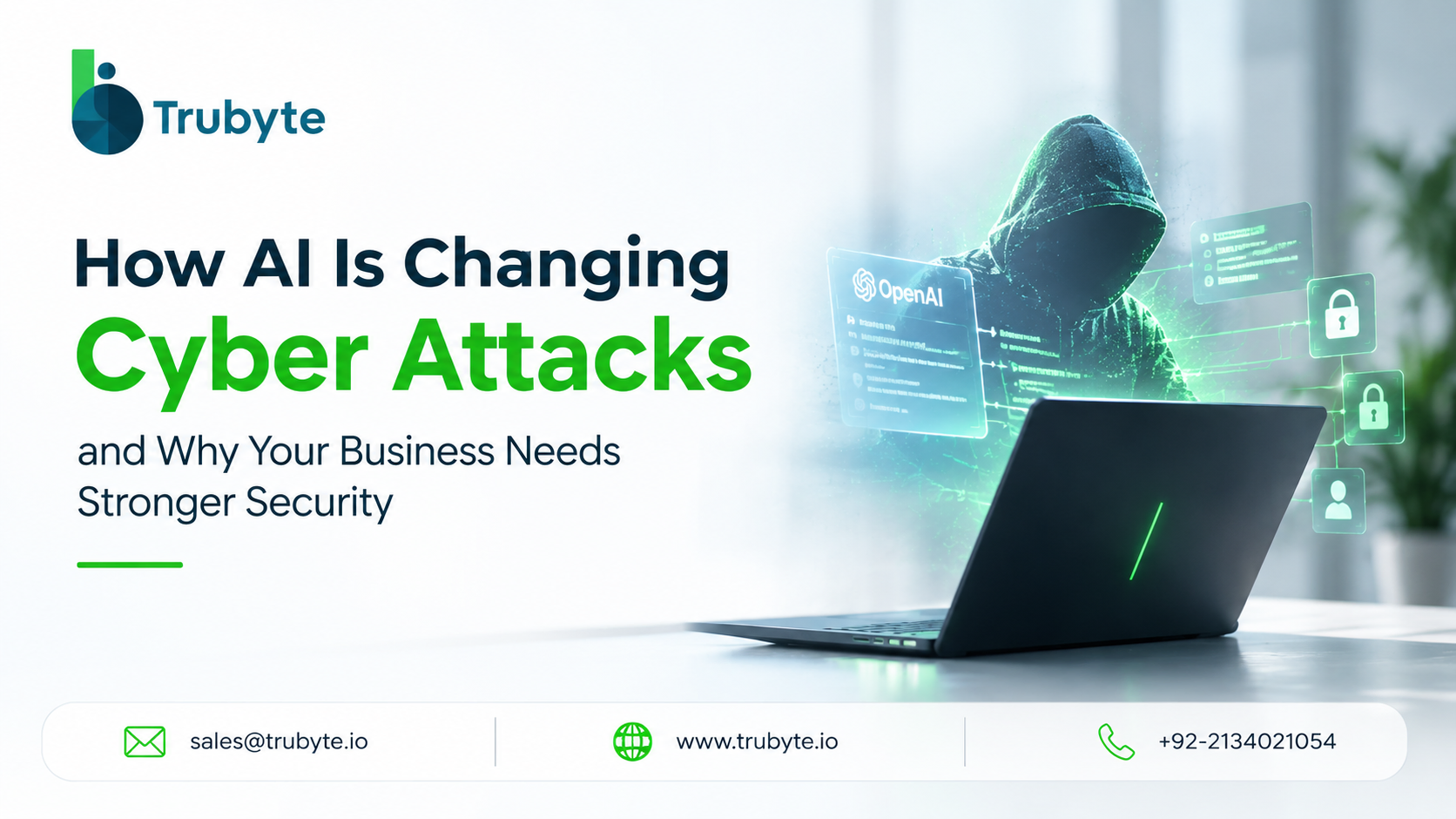
Smarter phishing. AI can write clean, professional emails that match your company tone, mention real projects and appear to come from a manager, a supplier or a bank. Many employees who would have ignored an old style scam now click because the message feels genuine.
Faster vulnerability hunting. Automated tools can scan huge numbers of websites, servers and applications for outdated software, exposed admin panels, weak settings and known flaws. They then rank the easiest targets first. Your website does not need to be famous to be on that list. It only needs to be vulnerable.
Convincing impersonation. Cloned voices and fake video are being used to pressure staff into sharing passwords or approving urgent payments. A phone call that sounds exactly like your director is no longer proof of anything.
Password attacks at scale. Stolen credentials from older breaches are tested against thousands of other services. If your team reuses passwords, one leak can open many doors.
Adaptive malware. Some malicious code can change its behavior to avoid detection, which means a basic antivirus tool on its own is no longer enough.
Why Websites and Business Systems Are Prime Targets
Your website is often the first thing a customer sees and the first thing an attacker tests. It usually connects to customer records, payment systems, admin panels and internal tools. One weak plugin, one reused password or one unpatched server can give an attacker a route to everything behind it.
Businesses in Pakistan are also moving quickly toward cloud services, online payments and remote work. That growth is good for business, but every new system, account and integration is another place where something can go wrong if it is not configured and monitored properly.
The Real Cost of a Breach
Most people think of a breach as stolen data. The real damage goes much further.
Financial loss. Investigation, recovery, legal costs and lost sales add up quickly, and ransom demands can add another layer of pressure.
Downtime. Ransomware and other attacks can stop operations for days. For many businesses, even a few hours offline means missed orders and unhappy customers.
Lost trust. Customers share information because they trust you to protect it. Once that trust is shaken, rebuilding it can take years.
Legal and compliance exposure. Pakistan is moving toward stronger data protection rules, and existing laws already create obligations around personal data. You can read more in our guide to data protection rules in Pakistan.
Why Security Can No Longer Wait
Many businesses still treat security as something to fix after an incident. When attackers use AI to move faster, that approach is too slow. By the time you notice the problem, the damage may already be done.
Good security is about lowering risk before it turns into a crisis. That means knowing where your weak points are, fixing them early and watching for unusual activity every single day. It is also far cheaper to prevent an incident than to recover from one.
Practical Steps You Can Start Today
- Keep everything updated. Operating systems, plugins, themes, frameworks and firmware all need regular patching.
- Use strong, unique passwords and multifactor authentication. This one step blocks a large share of account takeover attempts.
- Train your people. Teach staff to pause and verify unexpected requests, especially anything involving money, passwords or urgent deadlines. Our human risk and awareness training is built for exactly this.
- Limit access. Give each person only the access their job needs and remove accounts when people leave.
- Back up and test your recovery. A backup you have never tested is a guess, not a plan. See our backup and disaster recovery service.
- Test your defenses. Regular vulnerability testing and threat simulation shows you what an attacker would find before an attacker finds it.
- Have a response plan. Decide in advance who does what if something goes wrong, so nobody is improvising under pressure.
How Trubyte Helps You Stay Ahead
At Trubyte, we are cybersecurity experts who help businesses understand their real exposure and fix it. Our cybersecurity solutions are built in layers, so one failure does not become a full breach.
- Zero Trust and endpoint protection to stop threats before they run
- Network security as an authorized Fortinet partner in Pakistan
- Proactive threat hunting and ransomware readiness to find trouble early. Learn more about threat hunting and ransomware readiness
- Digital forensics and incident response when you need fast, expert help during an attack
- Penetration testing and red team exercises that show where you are weak
Attackers are using the newest tools available. Your defense should be just as current. Speak with our team through the Trubyte contact page or request a security consultation and find out where your business stands before someone else does.